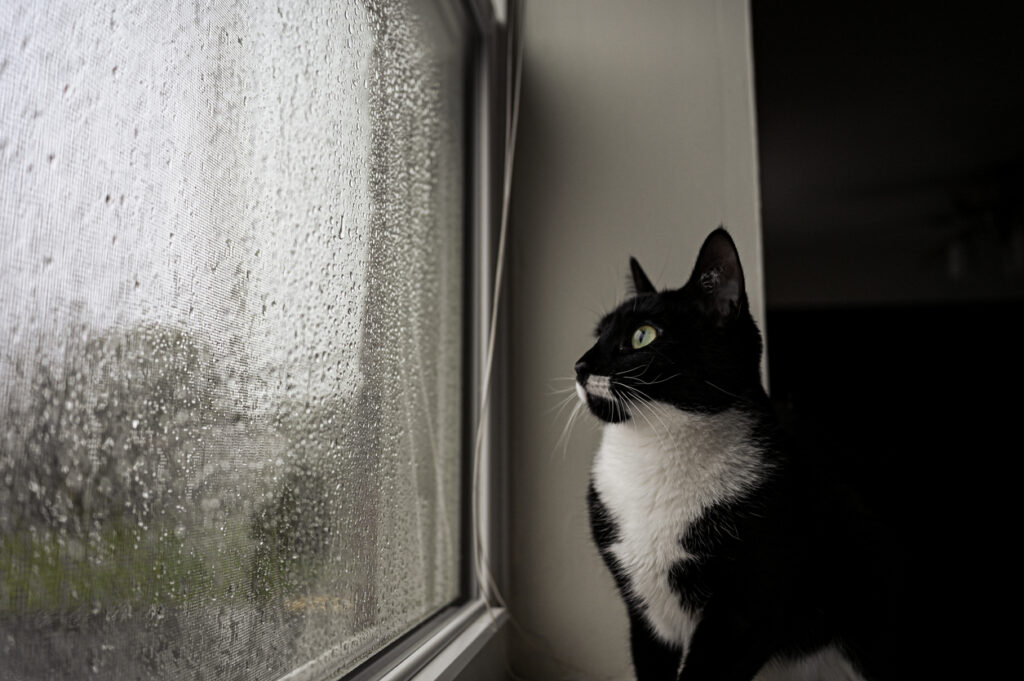
What are the wet weather health risks for dogs and cats? The main risks are leptospirosis and giardia from puddles and standing water, skin and ear problems from mud and damp fur, intestinal worms, fleas and ticks that stay active on mild days, toxic mushrooms, and rodent bait. Hillsboro Veterinary Clinic explains how to spot each one and how to prevent it.
Winter in Hillsboro means rain, mud, and puddles for weeks at a time. For dogs and cats, that wet world brings more than muddy paws.
Most of it is preventable once you know where it hides.
Rainy season pet care starts on the walk itself, so follow one from the puddle to the towel and watch for what hides along the way.
Stop One: Are Puddles and Standing Water Dangerous for Dogs and Cats?
Yes, they can be. Puddles, ponds, and slow-moving water can hold bacteria such as Leptospira and parasites such as Giardia, which spread through contaminated urine and feces from wildlife and other animals. Dogs who drink from puddles or splash through mud are most exposed, and outdoor cats can pick up the same organisms from water and prey. Carry fresh water on walks and discourage puddle drinking.
Stop Two: What Is Leptospirosis, and Should My Dog Be Vaccinated?
Leptospirosis in dogs is a bacterial infection that spreads through the urine of infected wildlife and livestock and can damage the kidneys and liver. Dogs are the most commonly affected, and the infection can also pass to people. The American Animal Hospital Association now lists the leptospirosis vaccine for dogs as a core vaccine, recommended from 12 weeks of age with a second dose two to four weeks later, so ask your veterinarian where your dog stands.
Signs include fever, vomiting, loss of appetite, lethargy, increased thirst and urination, and yellowing of the gums or eyes. Cats are affected far less often, but cats that hunt rodents can still be exposed, so mention any outdoor habits at your visit. Call our Hillsboro vet services team promptly if your pet develops these signs after wet-weather exposure.
Stop Three: Can Mud and Damp Fur Cause Skin Problems?
Yes. Fur that stays wet traps moisture against the skin and can lead to hot spots, irritated skin, and yeast or bacterial infections, especially in thick-coated dogs and in skin folds. Mud packed between the toes can irritate the paws too, so watch for red, moist, smelly, or itchy patches that do not clear up on their own.
Stop Four: What Are the Signs of Ear and Paw Problems After a Wet Walk?
A dog ear infection after rain is common in floppy-eared dogs when moisture lingers, and signs include head shaking, scratching at the ears, redness, odor, or discharge. Check between the toes for mud, cuts, and redness, and call us if a paw stays sore or your pet keeps licking it.
Stop Five: Are Fleas, Ticks, and Worms Still a Problem in Winter?
Yes. Fleas thrive indoors all year, ticks can stay active on mild winter days, intestinal worms persist in damp soil, and giardia in dogs and cats spreads through contaminated water. Year-round pet parasite prevention is the simplest protection for dogs and cats. Soft stools, weight loss, or a dull coat are all reasons to have a stool sample checked.
Stop Six: What Rainy-Season Hazards Hide in the Yard and Garage?
Wet weather brings mushrooms, and some wild mushrooms are toxic to pets. Check the yard regularly, remove mushrooms you find, and call us right away if your dog or cat eats one. If you can, bring a photo or a sample of the mushroom with you.
Rain also pushes rodents indoors, and rodent bait is a serious poison for dogs and cats. Keep bait stations out of reach, and tell us at once if you think your pet ate bait or a poisoned rodent.
How Do Veterinarians Test for Leptospirosis and Parasites?
Our veterinary services in Hillsboro, OR start with a physical exam and your pet’s outdoor history, then may recommend laboratory testing such as a fecal test for worms and Giardia, or blood and urine tests if leptospirosis is a concern. Early testing helps catch problems before they affect the kidneys, liver, or digestive system.
How Can You Clean Up After a Wet Walk?
- Towel-dry your pet’s coat, belly, and legs, and dry thoroughly between the toes.
- Run your hands over your pet’s coat after outdoor trips to check for ticks, burrs, and sore spots.
- Dry the ears, especially on floppy-eared dogs.
- Wash bedding and towels regularly, since damp fabric breeds odor and bacteria.
- Wash your hands after handling muddy or wet pets, since some wet-weather infections can spread to people.
Never give your pet human medication for an upset stomach or skin irritation, since many common medicines are toxic to dogs and cats. Call us first.
When Should You Schedule Pet Wellness Exams in the Wet Season?
Book a visit if your pet drinks from puddles or streams, spends time near wet areas, has soft stools, or has skin or ear problems that keep returning. Regular pet wellness exams let us review vaccines, parasite prevention, and any new symptoms before they become bigger problems.
Keep Your Pet Healthy Through the Rainy Season at Hillsboro Veterinary Clinic
Rainy-day walks should end with a happy, healthy pet, not a mystery rash, an upset stomach, or a sore paw. Hillsboro Veterinary Clinic is one of the trusted vets in Hillsboro, OR. We schedule sick visits as well as wellness visits, so if something does not seem right, call (503) 648-4117 or book your pet’s wet-season checkup at Hillsboro Veterinary Clinic.
Sources: AAHA canine vaccination guidelines and Companion Animal Parasite Council guidance on year-round prevention.